
 thefridaynews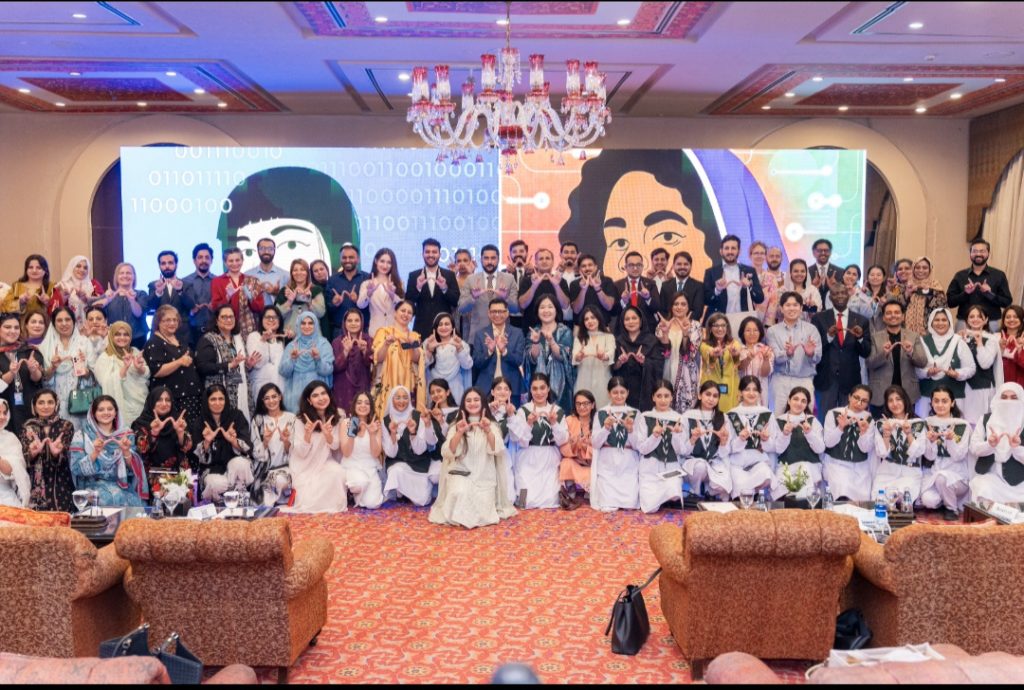
Ministry of IT & Telecom, UN Women, and KOICA Partner to Launch Pakistan’s First Gender-Responsive AI School• Pakistan becomes the first country in South Asia to host the full national Training of Trainers (ToT) track of the UN Women AI School• The initiative aims to achieve the United Nations Sustainable Development Goals in Gender EqualityIslamabad, Pakistan, 30 July 2026: The Ministry of Information Technology and Telecommunication (MoITT), together with UN Women Pakistan and with support from the Korea International Cooperation Agency (KOICA), have launched the UN Women Gender-Responsive AI School Pakistan, marking a major step towards advancing inclusive, ethical, and gender-responsive artificial intelligence (AI) in Pakistan.The Gender-Responsive AI School aims to strengthen national capacity by equipping policymakers, government institutions, parliamentarians, the United Nations system, academia, civil society, the private sector, and community leaders with the knowledge and practical skills to harness AI responsibly and ensure women and girls are equal participants in Pakistan’s digital transformation.Welcoming participants, Mr. Jamshed M. Kazi, Country Representative, UN Women Pakistan, said:” Pakistan is setting a new benchmark for the Asia-Pacific region through the UN Women Gender-Responsive AI School; the first initiative in the region to deliver a national Training of Trainers programme with tailored learning pathways for the executive, legislative, and judicial branches of government, as well as civil society and the private sector. What begins here today is not following a precedent; it is setting one. Together with the Government of Pakistan, the Ministry of IT & Telecom and KOICA, we are investing in the leadership, institutions, and skills needed to build an inclusive, ethical, and gender-responsive AI future. “The curriculum combines conceptual learning with practical application through tailored learning pathways covering AI foundations, gender-responsive and ethical AI, AI governance, prompt engineering, AI agents, and AI applications for public administration and inclusive development. Ahead of its launch, the initiative delivered specialized training programmes for parliamentarians, government officials, UN personnel, academia, and civil society, creating a growing national network of AI champions.Speaking at the launch, Ms. Sodam Baek, Deputy Country Director, KOICA Pakistan Office, said:”KOICA is proud to support the UN Women Gender-Responsive AI School as an investment in Pakistan’s inclusive digital future. By strengthening digital skills and promoting responsible AI, we are helping build an innovation ecosystem where women and girls can participate equally and contribute to sustainable development.”The initiative addresses a significant global policy gap. According to UN Women’s analysis, only around two dozen of nearly 140 national AI policies worldwide make any reference to gender. Aligned with the Global Digital Compact, the CSW67 Agreed Conclusions, and the Beijing+30 agenda, the AI School translates global commitments into national action by embedding gender equality, ethics, and inclusion into AI policy, governance, and innovation.During the ceremony, MoITT and UN Women Pakistan signed a Memorandum of Understanding (MoU) to institutionalize the AI School, followed by its symbolic handover to the Ministry, reinforcing national ownership and long-term sustainability.Delivering the keynote address, Ms. Shaza Fatima Khawaja, Federal Minister for Information Technology and Telecommunication, said:”Artificial intelligence is transforming every sector of society, and Pakistan is committed to ensuring this transformation is inclusive and responsive. Through our partnership with UN Women and KOICA, we are strengthening institutional capacity, advancing ethical AI governance, and creating opportunities for women and girls to lead and thrive in the digital economy.”The launch marks a historic milestone, with Pakistan becoming the first country in South Asia to host the full national Training of Trainers (ToT) track of the UN Women AI School. Since 2024, the regional initiative has trained more than 5,000 policymakers, UN personnel, civil society leaders, and young innovators across Asia and the Pacific. By institutionalizing the AI School through a nationally owned platform, Pakistan is setting a regional benchmark for gender-responsive AI governance.A highlight of the event was the presentation of outcomes from the Training of Trainers programme, showcasing practical applications of AI in governance, parliamentary research, education, and community engagement.The initiative contributes to Pakistan’s digital transformation agenda and the achievement of the Sustainable Development Goals, particularly SDG 5 (Gender Equality) and SDG 9 (Industry, Innovation and Infrastructure). MoITT, UN Women and KOICA will continue working with development partners, academia, civil society, and the private sector to ensure that AI becomes a force for equality, innovation, and sustainable development.About Ministry of IT and TelecommunicationThe Ministry of Information Technology and Telecommunication (MoITT) is responsible for formulating and implementing policies, strategies, and regulatory frameworks to accelerate Pakistan’s digital transformation. The Ministry works to expand digital connectivity, promote innovation and emerging technologies, strengthen cybersecurity, enhance digital governance, and develop a skilled workforce to support the growth of Pakistan’s digital economy. About UN WomenUN Women is the United Nations entity dedicated to gender equality and the empowerment of women. It works globally to eliminate discrimination against women and girls, empower women, and achieve equality between women and men.About KOICAThe Korea International Cooperation Agency (KOICA) is the Republic of Korea’s governmental agency for grant aid and technical cooperation. Established in 1991, KOICA supports sustainable and inclusive socio-economic development in partner countries in line with the Sustainable Development Goals, working across areas including education, governance, gender equality, and digital transformation.