
CASS Lahore Seminar Calls for Deeper Industrial Localisation and Indigenous Manufacturing in Pakistan
 thefridaynews
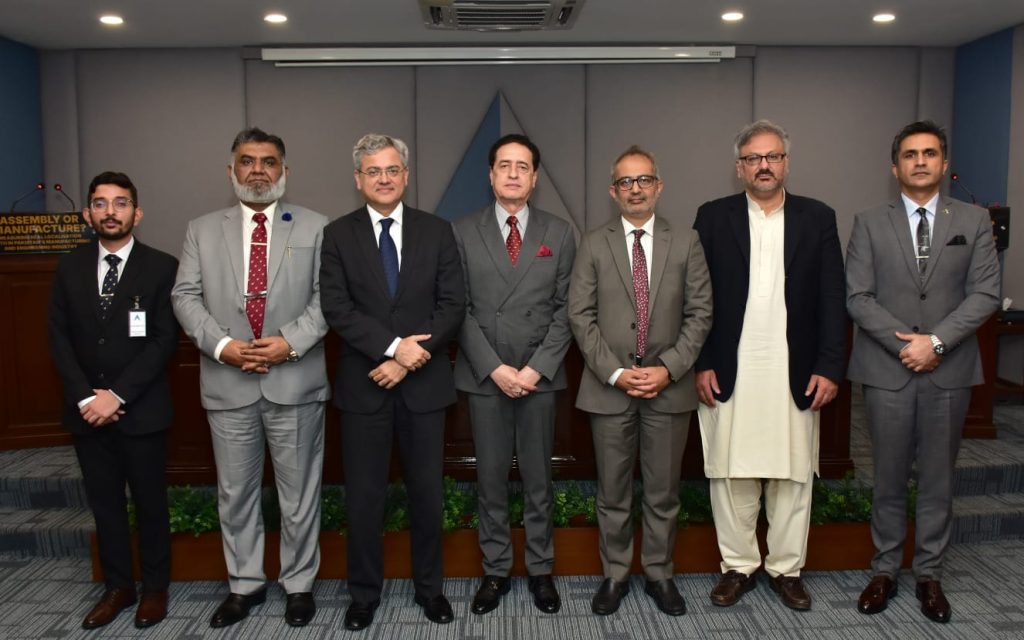
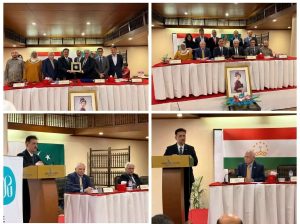
The Centre for Aerospace & Security Studies (CASS), Lahore, organised a seminar titled “Assembly or Manufacture? Measuring Real Localisation Depth in Pakistan’s Manufacturing and Engineering Industry.”
Academics, intellectuals and business professionals examined the depth and substance of localisation in these sectors and exchanged views on the opportunities and challenges facing Pakistan’s industry.
Dr Shahid Razzaque, Director (Economy), CASS Lahore, delivered the opening remarks.Mr Amir Allawala, Chief Executive Officer, Tecno Group of Companies, spoke on “Localisation and Indigenous Manufacturing in Pakistan: Industry Perspectives, Constraints and the Path to Technology Absorption.” He urged Pakistan to move its industrial base beyond assembly towards deep manufacturing, indigenous component production and technology absorption, noting that a capable industry would strengthen employment, engineering and defence capabilities. He identified tariff struggles, the high cost of doing business and lack of raw-material industries as key barriers to indigenous manufacturing and technological self-reliance.Dr Ali Salman, Founder and CEO, Prime Institute, Islamabad, spoke on “Industrial Localisation: Economic and Policy Perspectives.”
He argued that localisation should be a means rather than an end, with competitiveness, productivity, innovation and export performance guiding industrial policy. He advocated trade openness, market competition and integration into global value chains, and cautioned against excessive protectionism. Drawing on regional examples, he called for realistic localisation targets and an export-oriented industrial policy.Mr Usman Khan, Director, Technology for People Initiative, LUMS, Lahore, spoke on “From Policy to Production: Building Measurable Manufacturing Capability in Pakistan.” He called for industrial policy to focus on measurable capabilities, including value addition, productivity, technological learning and human capital. He cited economic constraints, inadequate public investment, regulatory burdens and skills gaps as key barriers, and urged policy continuity, institutional reforms and stronger government – private sector collaboration.In his concluding remarks, Air Marshal Asim Suleiman (Retd), President, CASS Lahore, stressed the need for a coherent industrial strategy built on measurable localisation, technological advancement, productivity and skilled human capital. He underscored policy continuity, institutional coordination, public investment and government-industry-academia collaboration, and highlighted the strategic value of indigenous production in strengthening economic resilience, reducing external dependencies and supporting defence preparedness. He also acknowledged the Pakistan Air Force’s contribution under Air Chief Marshal Zaheer Ahmed Baber Sidhu, particularly through initiatives such as NASTP, in promoting aerospace war potential and indigenous industrial development, which lead to Pakistan’s victory during May 2025.
The seminar concluded with an interactive session in which participants discussed challenges in assembly and manufacturing, the quality of industrial products, civil-military collaboration, gaps in quality education, and the way forward for Pakistan.