
 thefridaynews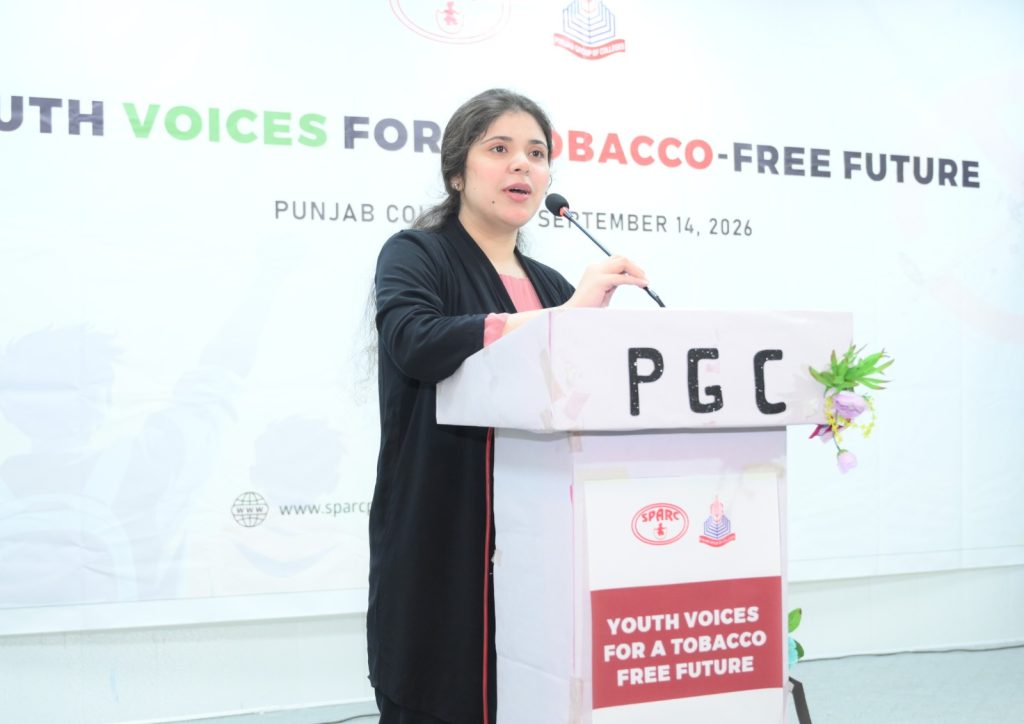
The Society for the Protection of the Rights of the Child (SPARC) organized a session with youth, during which youth ambassadors underscored the importance of Graphic Health Warnings (GHWs) on cigarette packs, describing them as one of the most effective and cost effective measures to reduce tobacco use among children and youth. The youth ambassadors appealed for increasing the coverage of GHWs from the current 60% to 85%, emphasizing the importance of stronger health warnings to better inform and protect children and youth from initiating tobacco use.The session also provided an opportunity for youth to raise their voices through the “Youth Voices for a Tobacco-Free Future” petition. Youth participants signed the petition in support of stronger TAPS regulations and increasing GHW coverage from 60% to 85%, highlighting the need for greater protection of children and youth from tobacco related harm.Tehreem Akhtar Qureshi Youth Ambassador highlighted that “Graphic Health Warnings (GHWs) have become one of the world’s most effective public health measures because they replace attractive tobacco packaging with the reality of smoking-related diseases. Pakistan deserves recognition for the progress it has made in tobacco control. However, as a Party to the WHO Framework Convention on Tobacco Control (WHO FCTC), Pakistan committed to implementing Graphic Health Warnings covering 85% of cigarette packaging under Article 11.” She further highlights that “despite this commitment, progress has been slow. Tobacco remains responsible for more than 192,000 preventable deaths every year, while over 31 million adults continue to use tobacco products. These figures highlight that there is still an opportunity to strengthen tobacco control measures. “Shafia Asad youth Ambassador Highlights that Expanding Graphic Health Warnings to 85% can play a vital role in protecting millions of people, particularly children and youth, from the dangers of tobacco addiction, further speaking on the issue, she said that tobacco continues to place an enormous burden on Pakistan’s health system. Every year, thousands of people lose their lives to diseases caused by tobacco use, including lung cancer, heart disease, stroke, chronic respiratory illnesses and other preventable conditions. These deaths are not only tragic for families but also place significant pressure on the country’s healthcare resources and economy.Ayan Akhtar, youth advocate, mentioned that “Tobacco products should never look attractive. Cigarette packs should clearly show the devastating health consequences of smoking. Graphic Health Warnings are not just pictures, they are a public health intervention that informs, discourages and saves lives,” Dr. Khalil Ahmad program Manager at SPARC said that Pakistan has made important progress in implementing the WHO’s MPOWER measures, including tobacco taxation, advertising restrictions, and pictorial health warnings. However, further progress is needed to fully implement all six MPOWER measures. In particular, introducing larger and regularly rotating Graphic Health Warnings covering 85% of tobacco packaging would strengthen public awareness, encourage tobacco users to quit, discourage children and youth from initiating tobacco use, and reduce the appeal of tobacco products. Countries such as Brazil, Turkey, Canada, Thailand, and Australia have successfully implemented larger and regularly rotating Graphic Health Warnings as part of comprehensive tobacco control strategies, demonstrating their effectiveness in reducing tobacco use.