
 thefridaynews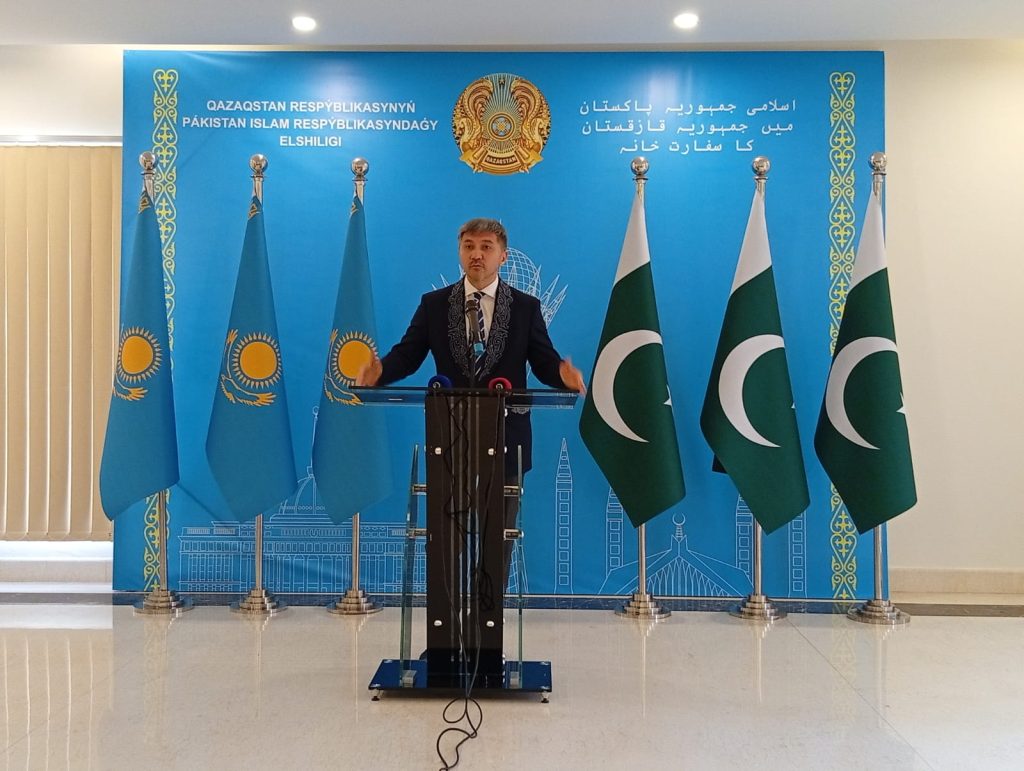
New Kazakhstan Entering New Stage of Development
Republic of Kazakhstan, the largest country in Central Asia, in the Organization of Islamic Countries and 09th in the whole world, has passed through a turning point of national history after the new constitution entered into force on 01 July 2026 on the path to transform the state into New Kazakhstan according to the vision of President Kassym Jomart Tokayev as he seeks ” Just, Strong, Safe, Clean and Advanced Kazakhstan.”
This was shared by Ambassador Yerzhan Kistafin in his press conference on 20 July at the embassy in Islamabad. He shed light on the address of the President to joint session of the Parliament on 30 June 2026 and highlighted keynotes including beginning of construction of first nuclear power plant next year and five strategic priorities outlined by the leader of the nation.
1- Modernizing State Institutions
2- Transitioning to a New Economic Model
3- Strengthening Energy and Infrastructure
4- Building a Fully Digital State
5- Investing in Human Capital۔
The vision of a “New Kazakhstan” is focused on building a more transparent, accountable and inclusive state.The bicameral Parliament will be replaced by a unicameral Kurultai for which snap Parliamentary election will be held on 23rd of Aug this year.
President Tokayev highlighted the adoption of more than 300 laws over the past three years to support the country’s political and economic transformation. He mentioned upcoming election as an opportunity to demonstrate open, honest and competitive democratic politics.
Along with the Basic Law, the system of state power will also undergo a fundamental transformation.
Ambassador Kistafin shared the facts and figures of national economic development as it was detailed by the President in his address.
Last year, the national economy grew by 6.5 percent.For the first time in our history, GDP exceeded $300 billion, while GDP per capita has increased by 50 percent since 2019, reaching $15 thousand.
This is one of the highest figures among the countries of the Commonwealth of Independent States.
Inflation was brout down. After the first five months of this year, it had declined to 10.4 percent. As a result, the foundation has been laid for a new model of Kazakhstan’s economy.
Modern plants are being established across the country to manufacture automobiles, household appliances, freight railcars, construction materials, and other high-quality products. Between 2023 and 2025 alone, 540 industrial projects worth 3.7 trillion tenge were implemented.
The projects already launched have created nearly 50,000 permanent jobs. The completion of the planned 200 facilities will create employment opportunities for more than 20,000 additional people. Over the past five years, employment in small and medium-sized businesses has reached 4.5 million people. The share of this sector in GDP has also reached a record level, surpassing 40 percent for the first time.
Last year, more than 20 million square meters of housing were built in Kazakhstan – the highest figure in history. Thousands of families were able to move into homes of their own.
This year, twelve major projects are scheduled for completion, providing more than half a million rural residents with access to clean drinking water. Last year, one trillion tenge in credit resources was mobilized for concessional financing of the agro-industrial sector. For the first time, farmers gained access to long-term financing at an annual interest rate of five percent, contributing significantly to the modernization of agriculture.
As a result of these measures, gross agricultural output reached nearly ten trillion tenge, while exports increased by 30 percent to seven billion U.S. dollars – the highest level in more than a decade.
Kazakhstan has also achieved significant progress in our domestic pharmaceutical industry.According to the World Health Organization, Kazakhstan ranks first among the countries of the Commonwealth of Independent States in public confidence in its pharmaceutical industry.
The pharmaceutical market has exceeded one trillion tenge, while foreign investment in the sector has more than tripled over the past three years.